
If a sudden accident stopped you from working tomorrow morning, how many weeks could your family survive on savings alone without a paycheck?
Accident Protection & Income Security: Complete Guide to Personal Accident Coverage
Accidents happen without warning—during your daily commute, at the workplace, while traveling, or even within the comfort of your own home. When a person met with an accident, the financial impact extends well beyond immediate hospital bills. Lengthy medical rehabilitation, temporary or permanent loss of earning capacity, and ongoing household expenses can quickly drain your family’s long-term savings.
A standalone or employer-sponsored personal accident insurance plan steps in as a vital financial shock-absorber. By providing direct monetary compensation for accidental injuries, disabilities, and unexpected loss of life, it ensures your household income remains resilient no matter what happens on the road or at work.
Why Accidents Require More Than Basic Health Insurance
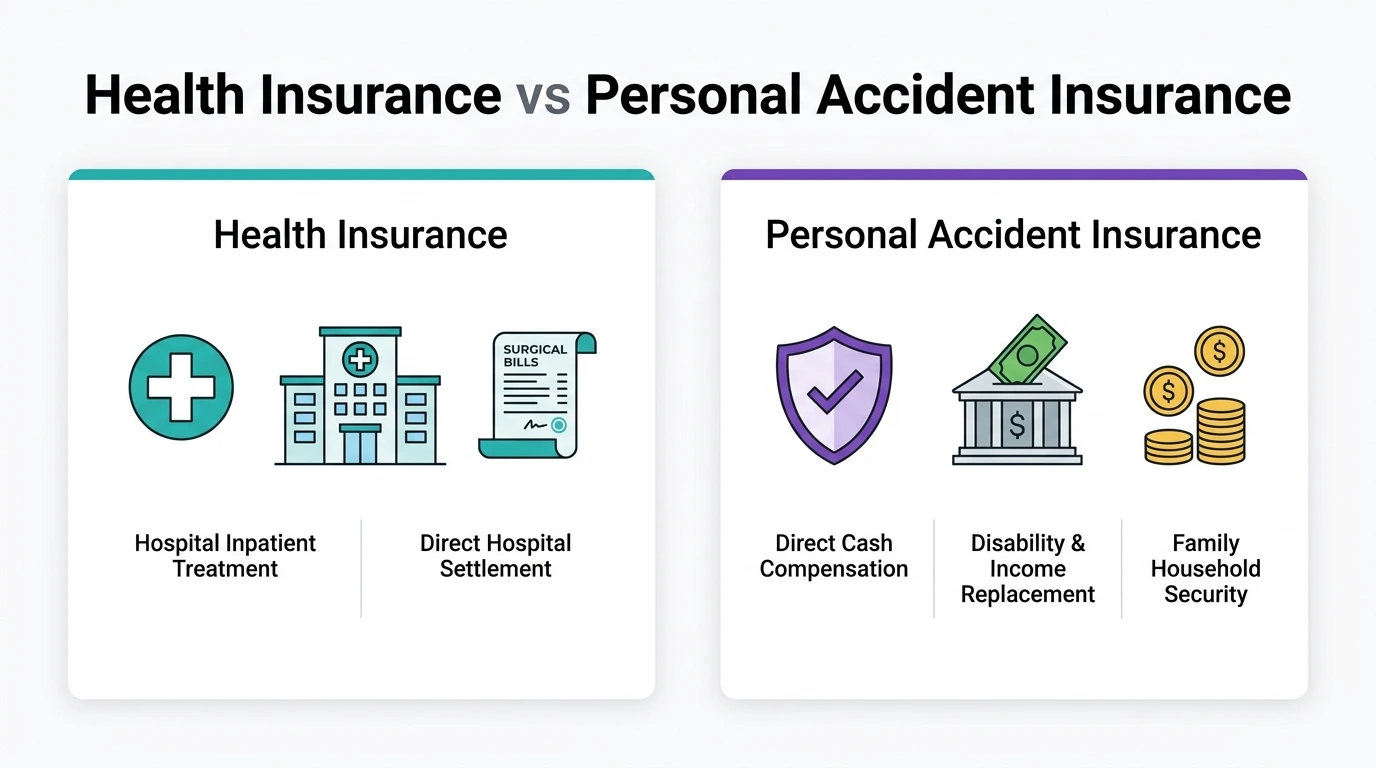
- Direct Income Replacement for Your Household: While health insurance reimburses hospitals for medical treatment, a dedicated personal accident cover pays fixed financial compensation directly to you or your nominees, giving you unrestricted funds to manage household expenses and debts.
- Robust Disability Safeguards: If an injury prevents you from working, structured payouts for Permanent Total Disability (PTD), Permanent Partial Disability (PPD), or Temporary Total Disability (TTD) replace your lost earnings during recovery.
- Immediate Protection with Zero Waiting Periods: Unlike illness-based insurance, personal accident policies provide Day 1 coverage with no waiting period, protecting you the moment your policy activates.
- Coverage Beyond Roadways: Protection is not confined to traffic mishaps; eligible policies cover slip-and-fall injuries, household burns, fractures, and workplace incidents 24/7, subject to policy terms and conditions.
- Mandatory and Fleet Transit Security: Many motorists ask, is personal accident cover mandatory? Indian motor vehicle regulations require owner-drivers to carry compulsory personal accident protection. Extending this protection through commercial vehicle insurance personal accident insurance schedules ensures commercial fleet owners, transport operators, and professional drivers are defended against catastrophic roadside risks.
- Unified Corporate Welfare: Companies leverage a group personal accident policy to extend round-the-clock, on-duty and off-duty safety nets across their entire workforce.
Supplemental Clearances & Enhanced Benefits
- Accidental Hospitalization Cash: In addition to disability payouts, select policies allow a defined percentage of the Sum Insured to be claimed directly for emergency inpatient medical treatment resulting from an accident.
- Personal Accident OPD Cover: Outpatient medical bills—such as minor fracture casting, wound dressings, diagnostic X-rays, and consultations that do not require 24-hour admission—can be reimbursed under specialized OPD riders.
- Worldwide 24/7 Shield: Your protection follows you globally, offering valid compensation whether an accident occurs in your hometown or while traveling internationally.
Policy Scope & Benefit Structure
| Plan / Benefit Type | Nature of Coverage | Core Compensation Provided | Target Segment |
| Individual Personal Accident Cover | Comprehensive 24/7 standalone policy | Payouts for accidental death, permanent total/partial disability, and weekly income compensation | Salaried professionals, self-employed individuals, frequent commuters |
| Group Personal Accident Insurance | Corporate and organizational group policy | Standardized disability compensation, accidental death benefits, and family support extensions | Corporate teams, factory workforces, enterprise personnel |
| Commercial Vehicle Driver Cover | Motor-integrated driver/owner schedule | Structured accidental death and permanent critical disability benefits linked to vehicular transit | Commercial vehicle owners, logistics drivers, transport teams |
| Temporary Total Disability (TTD) Rider | Income protection add-on | Regular weekly financial support during prescribed medical bed rest to replace active income | Primary earning members with monthly financial commitments |
What Happens When an Incident Occurs: Coverage Overview
- Accidental Death: A 100% lump-sum sum insured payout is disbursed directly to your designated nominee to clear pending liabilities and secure your family’s living standards.
- Permanent Total Disability (PTD): Full financial compensation is released if an injury permanently limits your ability to engage in any gainful employment.
- Permanent Partial Disability (PPD): Scheduled percentage benefits are paid out based on specific physical impairment, such as the loss of a limb, sight, or hearing.
- Temporary Total Disability (TTD): Staged weekly payouts replace your regular paycheck while you are medically confined to bed rest and temporarily unable to work.
- Emergency Support Extensions: Selected covers reimburse emergency ambulance transit, burn and fracture care, and provide education support grants for dependent children.
Key Considerations Before Finalizing Coverage
- Match Your Sum Insured to Occupational Exposure: Align your coverage amount with your daily travel patterns, job risks, and monthly living expenses rather than simply opting for the lowest premium.
- Balance Corporate vs. Independent Limits: An employer’s group personal accident insurance offers an excellent baseline, but it terminates when you switch jobs. Carrying an independent personal policy guarantees continuous, portable coverage.
- Review Standard Policy Exclusions: Policies typically exclude self-inflicted injuries, accidents caused by alcohol or drug impairment, participation in unlawful acts, or unendorsed hazardous adventure sports.
- Maintain Claim Preparedness: In the event of a mishap, notify the insurer promptly and compile all medical records, hospital bills, physician certificates, and official police records (FIR) for seamless claim settlement.
Key Takeaways
- Income Protection Over Hospital Bills: While health insurance settles hospital charges, personal accident insurance delivers cash compensation directly to your bank account to replace lost earnings.
- Comprehensive Disability Coverage: Offers structured financial relief across permanent total, permanent partial, and temporary disabilities.
- Immediate, Worldwide Defense: Enjoys Day 1 coverage with zero waiting periods, safeguarding you at home, at work, and across international travels.
- High Value, Budget-Friendly: Provides substantial financial security at economical premiums compared to traditional life and comprehensive medical plans.
- Multiple Policy Formats: Available through standalone personal covers, employer group personal accident plans, or vehicle-integrated policies.
Frequently Asked Questions
1.Is personal accident cover mandatory?
Under Indian motor vehicle regulations, owner-drivers are required to hold basic personal accident cover as part of their motor insurance policy. Standalone comprehensive personal accident insurance is optional, but it is strongly advised for primary breadwinners to protect family finances against career-halting disabilities.
2.How does personal accident insurance differ from health insurance?
Health insurance reimburses inpatient hospital treatment and surgery costs. A personal accident policy pays fixed lump-sum or weekly cash compensation directly to you or your nominee for accidental disability, income loss, or death, regardless of the hospital bill amount.
3.What should be done immediately if a person met with an accident?
Notify the insurance company as soon as practically possible. Collect and submit all essential claim documentation—including hospital discharge summaries, treating doctor certificates, diagnostic scans, police FIR/panchnama (if applicable), and completed claim forms—for prompt verification and payout.
4.Can an employee rely solely on group personal accident insurance provided by an employer?
Employer-provided group personal accident policies offer valuable baseline protection, but they remain subject to corporate sub-limits and cease immediately if you change employers. Maintaining an individual policy ensures your personal income remains protected throughout your career.